AI-Assisted Design System Workflow
From user stories to design-system-driven interfaces
I led a proof of concept to test whether an AI-assisted workflow could translate user stories into editable Figma interfaces, with an existing enterprise Design System as the source of truth.
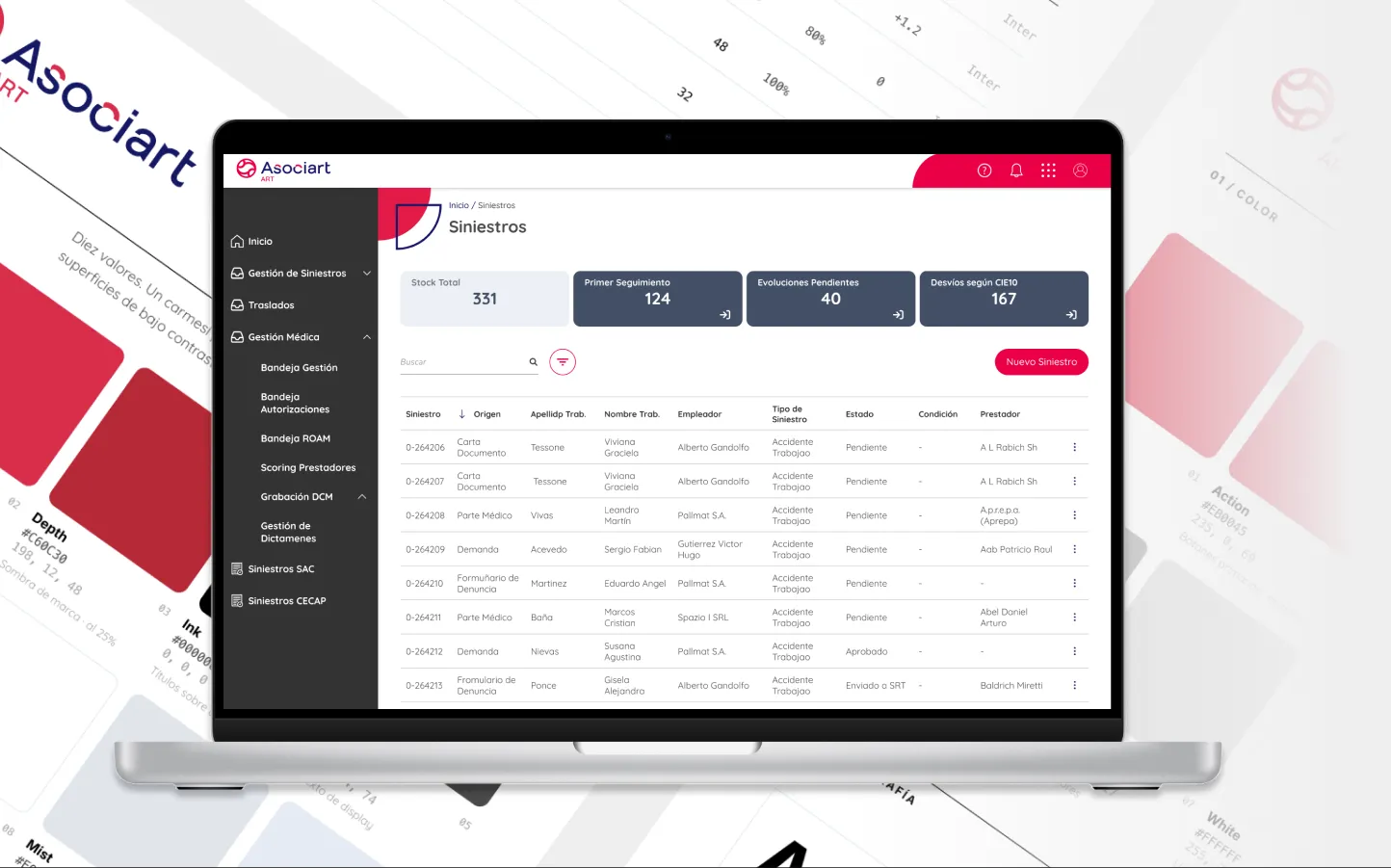
I used the Users management flow — already designed and approved — as the reference, so the model could carry that pattern over to Applications management. I standardised the structure of the user stories (role, goal, acceptance criteria and business rules), since they were the model's main input. The workflow combined those stories with explicit UX rules, mock data and structured Design System information — components, variants, tokens and states — instead of inventing UI from scratch.
What I tested
The first screens met the story but failed on composition and hierarchy. I tightened the UX rules and added context on states and flow behaviour. With that, the agent generated the Users and Applications tables and their create and edit modals directly in Figma through the Figma MCP — editable, built from Design System components and faithful to the reference pattern. Design review caught data inconsistencies across screens, which I fixed before handoff.
Status
POC validated on a real epic. The flows served as the handoff guide for development, and the stories shipped to production. The generation workflow wasn't automated as a process: the goal was to prove the translation layer, not to replace design decisions.
- Domain
- Design System Automation
- Length
- POC · 2026
- Role
- Leadership, design and execution